ClawCon 2026 · Founder.Codes
7 minutes · real usage

How I Run a
Real AI Team
with OpenClaw.

I run 10 named AI agents daily across engineering, marketing, and personal ops. Here's the operating model that makes it not a full-time job.

Cathryn Lavery · Founder.Codes 01 — 10
// the problem without a system
  • Chat context disappears between sessions
  • Agents duplicate work or miss handoffs
  • "Done" means nothing without proof
  • You become the memory layer
  • You're babysitting, not delegating
"OpenClaw works best when you treat it
like an OS for execution — not a chat toy."
02
The Team — Clear Ownership, Less Chaos
Agent Roster
Orchestration

Knox
Knox
Chief of Staff
Routes work, coordinates agents, enforces standards, closes loops

Scout
Scout
Triage Operator
Intake quality, reproduction context, issue creation, triage routing
Engineering

Rosie
Rosie
App Dev (RN + Backend)
Helm Focus app, backend integrations, Android lane

Swift
Swift
Native iOS/macOS Engineer
Apple signing, TestFlight, App Store Connect submissions

Atlas
Atlas
Shopify Engineer
Storefront, theme dev, Shopify implementation
Marketing
FIRED

Maximo
Maximo
Growth Operator
Ads, CRO, analytics, growth ops

Athena
Athena
Marketing Ops Agent
Campaign execution, channel updates, structured marketing deliverables

Rory
Rory
Content Lead
Blog, email, social copy and editorial workflows

Pixel
Pixel
Creative Strategist
Ad creative direction, briefs, concepts, script angles
03
The Operating Model — One Framework for Every Agent
Role → Mission → Skills → Heartbeat

Every agent on the team runs on the same four-layer model. This is what separates a system from a bunch of chat sessions.

01
Role
Who this agent is.
Identity, tone, non-negotiables. Stable across sessions.
02
Mission
What outcome this agent owns right now. Changes as priorities shift.
03
Skills
Repeatable execution playbooks. Shared across agents via one source of truth.
04
Heartbeat
Check-in cadence, health checks, escalation rules. Runs on schedule.
SOUL.md = Role  ·  MISSIONS.md = Mission  ·  skills/ = Skills  ·  HEARTBEAT.md = Heartbeat
Behavior lives in files, not chat context. Files persist. Chat doesn't.
Best example pair:
Scout — "route, don't fix. Evidence first. One owner per issue."
Athena — "draft-first. Verify links before posting. No raw debug output."
04
Files Do the Remembering. You Do the Thinking.
What Goes Where
OpenClaw out of the box
SOUL.md
standard
Agent identity, base behavior, tool guidance
USER.md
standard
Who it serves, communication preferences
SKILL.md
standard
Reusable operating procedures
HEARTBEAT.md
standard
Check-in cadence + escalation rules
AGENTS.md
standard
Global routing guardrails + team operating overlay
+
What we built on top
MISSIONS.md
we built this
Outcome ownership per agent. Role stops being vague.
QUEUE.md
we built this
Meetings → tasks → persistent state. No dropped handoffs.
triage-board.md
we built this
Central intake. One board, one owner, no dropped issues.
~/.openclaw/
we added
Central runtime/config repo. "No self-surgery" rule: no risky direct edits without guardrails.
~/.agents/
we added
Shared skills/prompt repo across machines. One fix improves every agent.
symlinked skills
we added
Skills are symlinked into agent workspaces so updates propagate everywhere fast.
Specialist SOULs
we went deep
Per-agent hard constraints. Scout: route-don't-fix. Athena: draft-first, verify before post.
05
One Agent, Up Close
Athena — Marketing Ops
Athena
Athena
Marketing Ops Agent
Draft first. Never ship public copy on first pass.
Every status update includes proof artifact.
Verify links and paths before saying "live."
Escalate blockers fast, don’t hide uncertainty.
Grow revenue via email: increase campaign-attributed revenue with weekly experiments.
Protect launch quality: no campaign sends without preview, QA, and approval checkpoint.
Raise execution speed: ship one tested campaign asset every workday.
email-flow-designer
klaviyo-email
ga4-analytics
shopify-analytics
meta-ads
copy-editing
Cleaner pattern: Soul defines behavior, Missions define outcomes, Skills define execution.
// Role → Mission → Skills → Heartbeat — the full chain, in one agent.
06
Trigger Mode — Choose the Right Start
Cron vs. Interactive
Mode A
Cron Job
Recurring, deterministic, boring-but-critical loops that must happen reliably on schedule.
  • Bug triage + GitHub routing (every few hours)
  • Sentry alert triage
  • PR comment follow-up (CodeRabbit enforce)
  • Nightly "one small feature" shipping loop
  • Bug triage + issue routing checks
  • Nightly memory extraction
  • Auth credential monitoring
  • Morning family brief (Ronan)
If it must happen reliably on schedule → cron.
Mode B
Interactive Run
Exploratory, one-off tasks and multi-step judgment calls that need active steering.
  • Complex debugging sessions
  • Architecture decisions + planning
  • "Send a new TestFlight" via text
  • New feature implementation
  • Reviewing + approving agent recommendations
  • Nextdoor / TaskRabbit coordination
If it needs active steering or judgment → interactive run.
07
Bug Triage Loop — Feedback Becomes Action Automatically
Business Use Case 01
// inbound report → triage → execute → verify
Tester / User
Inbound Report
Slack, crash alert, manual report
Scout
Intake + Investigate
Reproduce · normalize · create/update GitHub issue
Cron
Triage Agent
Polls open issues on interval. Routes to right dev.
Rosie / Swift
Dev Agent
Implements fix · opens PR
Verification Gate
Proof Required
Tests · PR link · close only after linked PR
📉
Before: days to a week Bug report → someone notices → someone fixes. Manual at every step.
Cron is the reliability layer Event-driven flows miss things. Scheduled polling checks catch what falls through.
🔗
No fixed without a linked PR This one rule kills most fake-done noise in the pipeline.
// We were e-comm. Building a digital product was a whole new skill set — this system is how we shipped it without a full eng team from day one.  ·  Scout: "route, don't fix. Exactly one owner."
08
Release Loop — Ops Can Be Systematized
Business Use Case 02
🔨
Build
Compile + bundle
🔐
Sign + Notarize
Code sign + Apple notarization
✓ gate
📦
EAS / Expo Submit
Preflight check blocks bad builds
✈️
TestFlight
App Store Connect submit
✓ gate
📡
Appcast Update
Sparkle metadata + signatures
Verify
Live endpoint + updater test
✓ gate
Before
Release and maintenance work was fragmented and manual. High context switching, easy to miss steps, hard to sustain velocity.
After — system-managed loops
Now we run two repeatable lanes: (1) guarded release pipeline, (2) nightly "one small feature" loop that keeps products improving without big planning overhead.
09
Working with Claws — Trust Less, Verify More
Hard-Earned Tips
// real failure story
What happened
An agent reported it had started a build when it had not actually started execution. The status sounded confident, but there was no process ID, no command output, and no deployment artifact to prove work had begun.
Execution integrity rule
Never say "done" or "working on it" unless execution actually started. Every status update must include proof: process ID, file path, URL, or command output. No proof = didn't happen. A false completion is worse than a delayed honest answer.
🤖 “—That’s on me.”
(every agent, right after they mess up)
// artifact-backed completion rules
  • 01
    PR link required to close a bug
    No linked merged PR = not done. No exceptions.
  • 02
    Live URL verification before "shipped"
    Agent self-checks the endpoint. Not just the deploy command.
  • 03
    Test output or run ID for code tasks
    Pass/fail proof attached. Not "tests should pass."
  • 04
    One shared skill repo, GitHub-sourced
    Symlinked into every agent. One update propagates everywhere.
// same system · personal leverage
Personal assistant lane

One request.
One clean handoff.

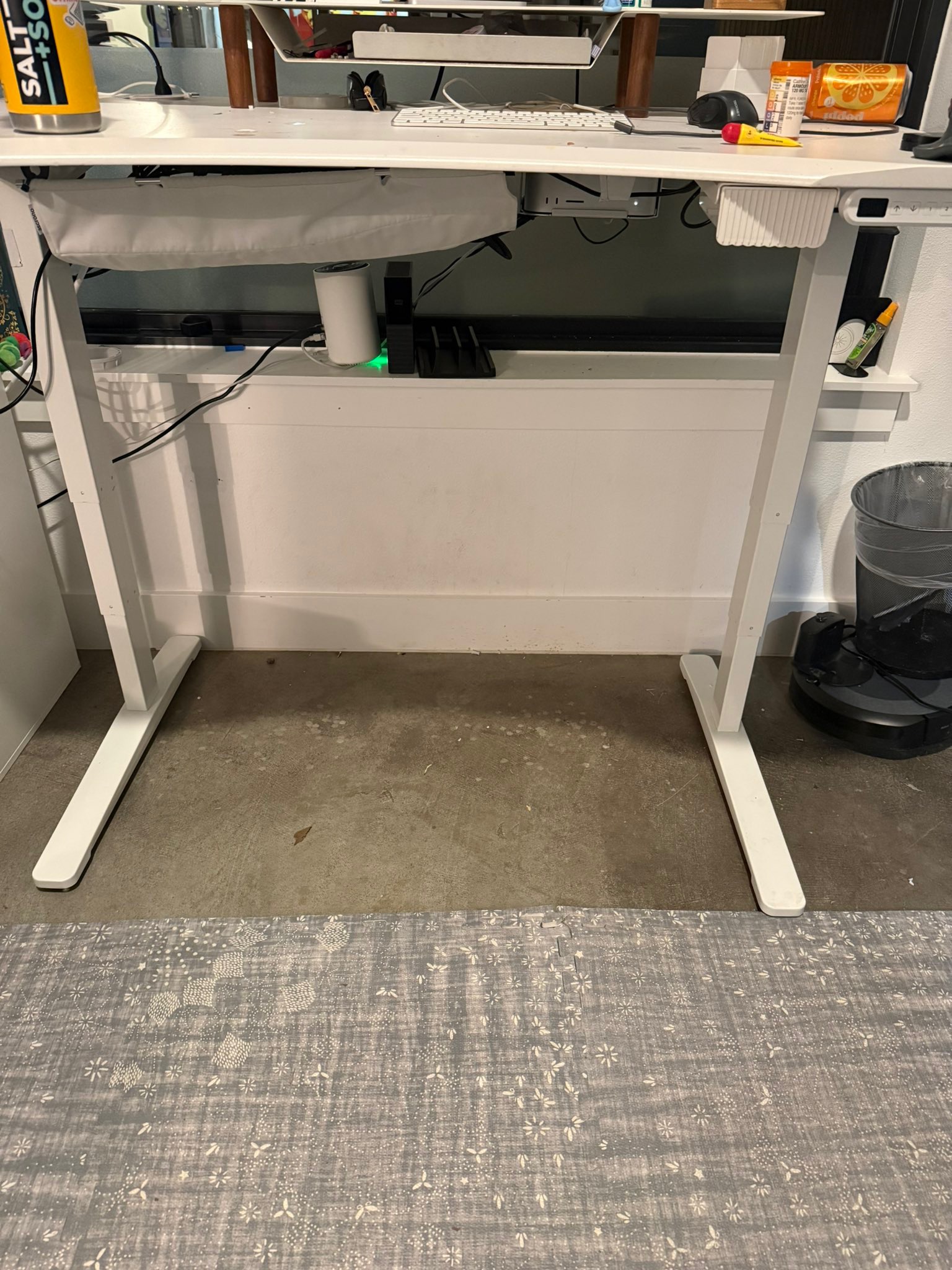
Week one, I asked OpenClaw to handle a Nextdoor post to find someone to organize our wires. It posted, filtered responses, and handed me one clean approval decision. Then we built a personal-assistant lane for my partner (we even published an article on it): binding + routing directly to her number, so now she asks her Claw to print things instead of asking me — plus groceries, party planning, calendar coordination, and household handoffs.
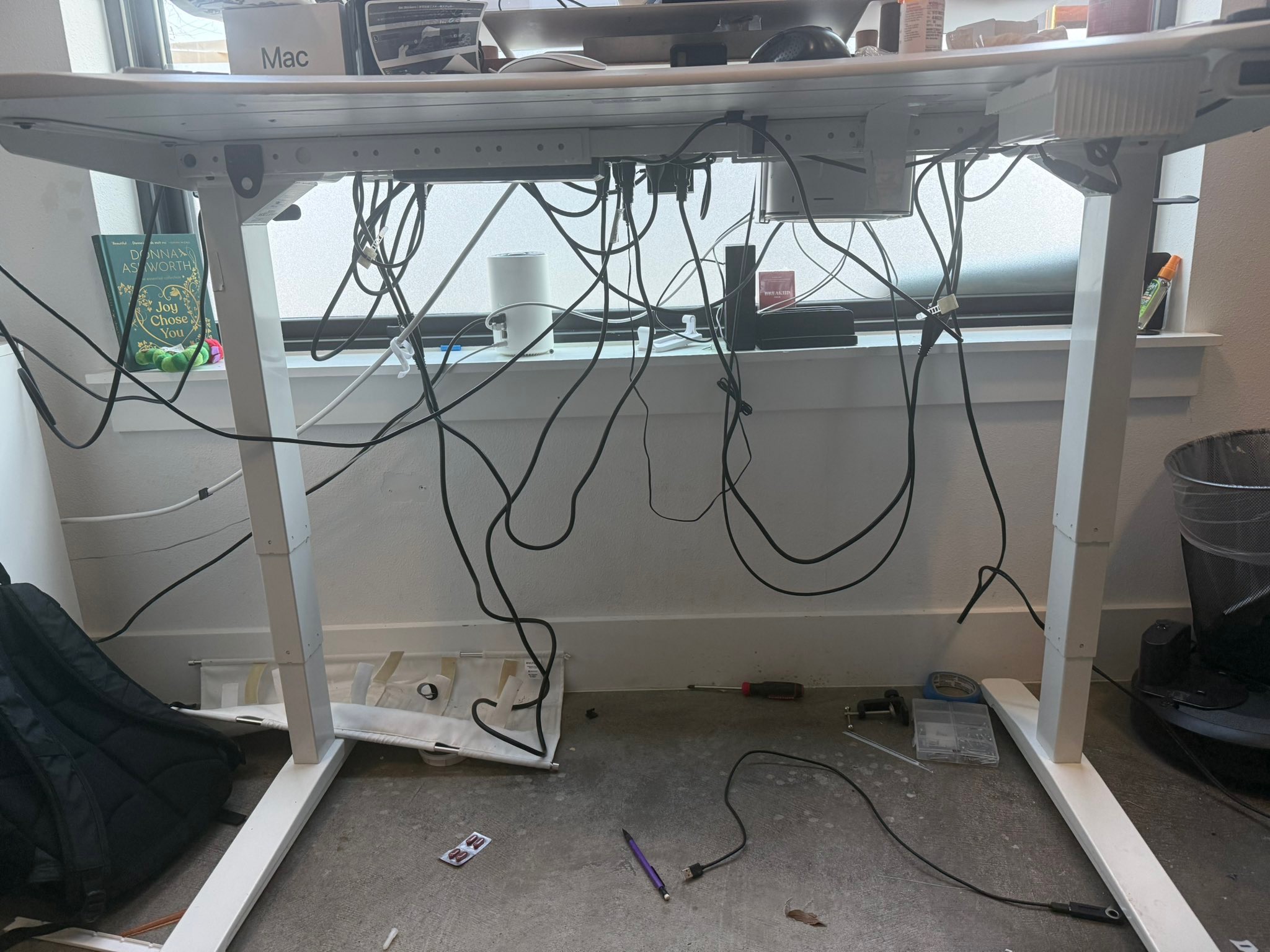
Before: messy wires
Before
After: organized wires
After
// thanks

Thanks — from a previously non-technical founder.

I’m sharing everything I’m learning as I build with AI agents.

founder.codes

QR code to founder.codes
Scan for notes, templates, and follow-ups.